


Mineral Glass vs Sapphire Crystal: Which Watch Glass Is Better?
Compare mineral glass and sapphire crystal watch glass, including scratch resistance, durability, cost and everyday performance.
.jpg)


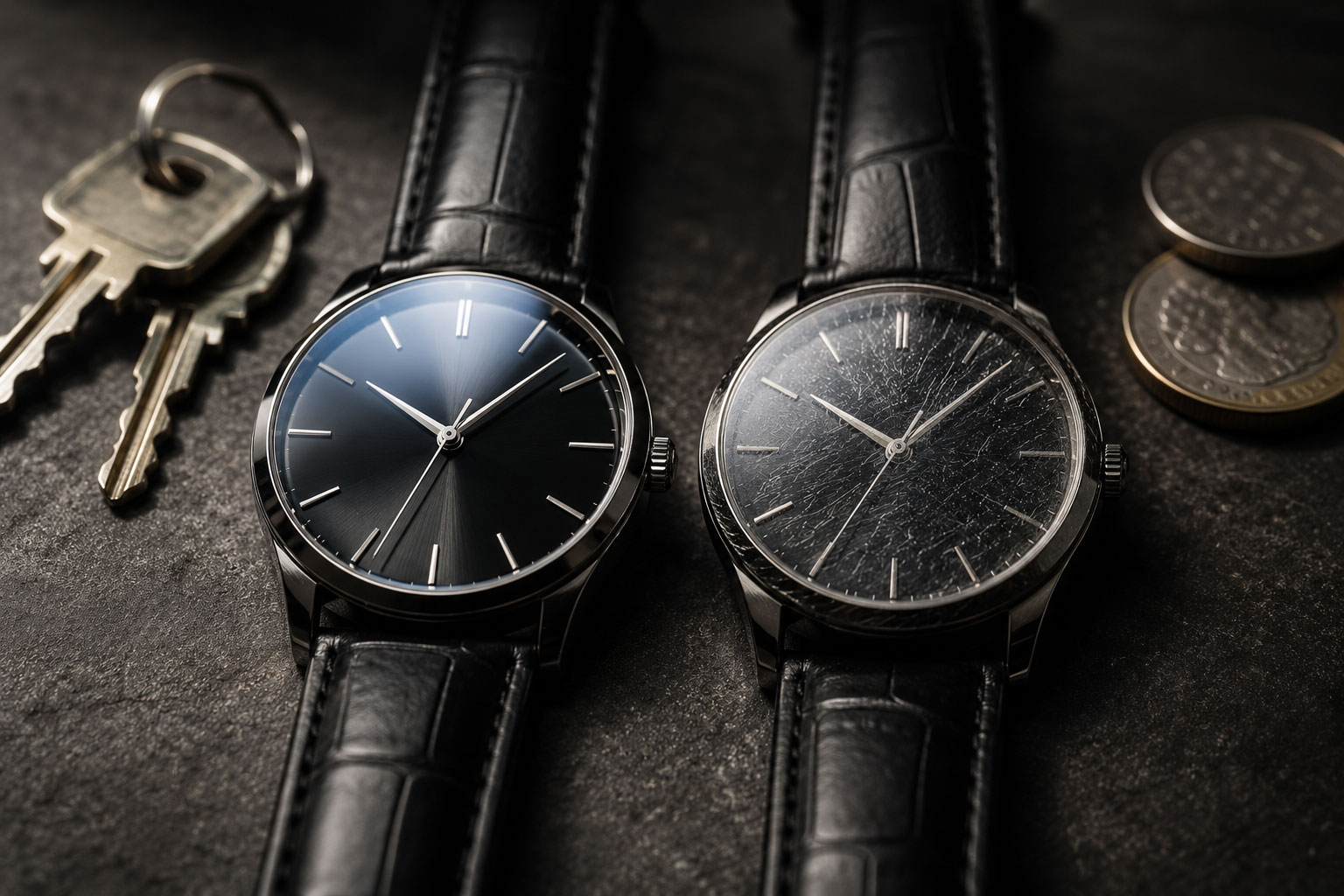
Mineral Glass vs Sapphire Crystal: Which Watch Glass Is Better?
When comparing watches, you'll often see terms such as Mineral Glass, Hardened Mineral Glass or Sapphire Crystal listed in the specifications. While these materials may look similar at first glance, they offer very different levels of durability, scratch resistance and long-term performance.
The crystal is one of the most important components of any watch. It protects the dial and movement while ensuring the watch remains easy to read and attractive to wear.
Understanding the differences between mineral glass and sapphire crystal can help you make a more informed buying decision and choose a watch that suits your lifestyle and budget.
In this guide, we'll explain how each material is made, compare their strengths and weaknesses, and help you determine which option is right for you.
What Is Watch Glass?
Despite the name, watch glass is not always made from traditional glass.
The transparent covering that sits above the dial is known as the watch crystal. Its primary purpose is to protect the watch face from scratches, impacts, dust and moisture while allowing the wearer to clearly read the time.
Modern watches typically use one of three materials:
- Acrylic crystal
- Mineral glass
- Sapphire crystal
Today, mineral glass and sapphire crystal are by far the most common options found in watches.
What Is Mineral Glass?
Mineral glass is a specially hardened form of glass designed to offer improved durability compared to standard glass.
It is widely used throughout the watch industry because it provides a good balance between cost, clarity and durability.
Many fashion watches, everyday watches and mid-range timepieces use mineral glass due to its affordability and dependable performance.
Manufacturers often apply additional hardening treatments to improve scratch resistance, creating what is sometimes marketed as hardened mineral glass.
Advantages of Mineral Glass
Mineral glass remains popular for several reasons.
Affordable
One of the biggest advantages is cost. Mineral glass is significantly less expensive to manufacture than sapphire crystal, helping keep watch prices more affordable.
Good Impact Resistance
Mineral glass generally performs well against everyday knocks and impacts.
Because it has slightly more flexibility than sapphire crystal, it can sometimes handle impacts better without cracking.
Clear Appearance
Mineral glass offers excellent clarity and allows the watch dial to remain easy to read in a variety of lighting conditions.
Easy to Replace
If damage does occur, replacement costs are usually lower than with sapphire crystal.
Disadvantages of Mineral Glass
While mineral glass performs well overall, it does have some limitations.
More Prone to Scratches
The biggest disadvantage is scratch resistance.
Over time, mineral glass can pick up small scratches from keys, desks, door handles and other everyday objects.
Although these marks are often minor, they can become more noticeable as the watch ages.
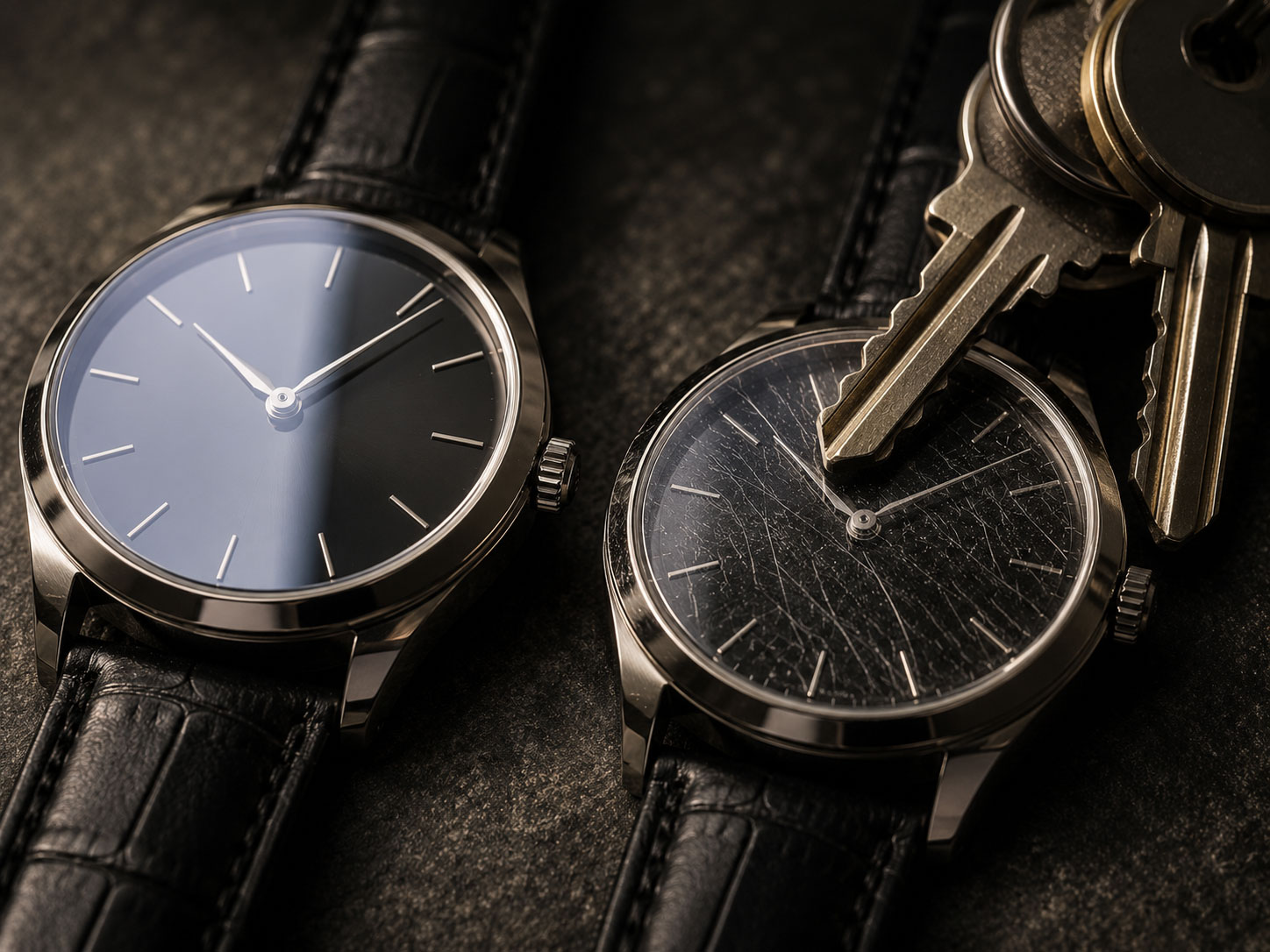
Lower Long-Term Durability
Compared to sapphire crystal, mineral glass generally shows signs of wear sooner, particularly if the watch is worn daily.
What Is Sapphire Crystal?
Sapphire crystal is considered the premium standard in modern watchmaking.
Rather than being made from glass, sapphire crystal is produced from synthetic sapphire, an extremely hard material created in specialised manufacturing processes.
Despite the name, it is not the same as the natural gemstones used in jewellery.
The resulting material is incredibly durable and highly resistant to scratches, making it one of the most desirable watch crystal options available.
Sapphire crystal is commonly found in premium watches, luxury watches and higher-end sports models.
Advantages of Sapphire Crystal
Exceptional Scratch Resistance
This is the main reason buyers seek out sapphire crystal.
Sapphire is one of the hardest materials used in watchmaking and is significantly more resistant to scratches than mineral glass.
Under normal daily wear, sapphire crystal can remain looking new for many years.
Premium Feel
Many buyers associate sapphire crystal with higher quality watches.
Its durability and long-lasting appearance contribute to a more premium ownership experience.
Excellent Clarity
Sapphire crystal provides superb visibility and can maintain its appearance for a very long time.
Many manufacturers also apply anti-reflective coatings to improve readability further.
Long-Term Value
Because sapphire crystal resists scratching so effectively, watches often maintain a cleaner, newer appearance over the years.
Disadvantages of Sapphire Crystal
Despite its advantages, sapphire crystal isn't perfect.
Higher Cost
Producing sapphire crystal is more expensive than manufacturing mineral glass.
As a result, watches equipped with sapphire crystal often carry higher price tags.
Less Impact Resistant
Although sapphire is extremely hard, it is also more brittle than mineral glass.
A severe impact that might leave a small mark on mineral glass could potentially cause sapphire crystal to chip or crack.
For most owners, this is unlikely to be a major concern, but it remains one of the trade-offs of sapphire's hardness.
Which Material Is More Scratch Resistant?
When it comes to scratch resistance, sapphire crystal is the clear winner.
Everyday items that can scratch mineral glass generally have little effect on sapphire crystal.
Objects such as:
- Keys
- Coins
- Door handles
- Desk surfaces
- Metal jewellery
are much less likely to leave visible marks on sapphire crystal.
This is one reason why many watch enthusiasts specifically look for sapphire crystal when purchasing a new watch.
Which Material Is Better for Everyday Wear?
The answer depends on your priorities.
If you want maximum scratch resistance and a crystal that remains looking pristine for years, sapphire crystal is usually the better choice.
If you want a more affordable watch that still offers reliable durability, mineral glass remains an excellent option.
For many people, both materials perform perfectly well in everyday use.

Is Sapphire Crystal Always Worth the Extra Cost?
Not necessarily.
While sapphire crystal is generally considered superior, the importance of the upgrade depends on how you wear your watch.
If you're purchasing a watch for occasional use or fashion purposes, mineral glass may provide everything you need.
If you plan to wear your watch daily for many years, sapphire crystal may justify its higher cost through improved scratch resistance and long-term appearance.
Many buyers view sapphire crystal as one of the most worthwhile upgrades available in a watch.
What About Hardened Mineral Glass?
Some manufacturers use hardened mineral glass as a middle ground between standard mineral glass and sapphire crystal.
Additional treatments improve the surface hardness and scratch resistance while maintaining the affordability of mineral glass.
Although it still doesn't match sapphire crystal for scratch resistance, it can offer excellent real-world performance.
Many respected watch brands use hardened mineral glass across their collections.
Which Crystal Should You Choose?
Choose mineral glass if you:
- Want excellent value for money
- Prefer a lower purchase price
- Need a reliable everyday watch
- Aren't overly concerned about minor scratches over time
Choose sapphire crystal if you:
- Want maximum scratch resistance
- Plan to wear your watch frequently
- Prefer premium specifications
- Want your watch to maintain a newer appearance for longer
Both materials have their place in modern watchmaking, and neither is necessarily the wrong choice.
Final Thoughts
Mineral glass and sapphire crystal both provide effective protection for your watch, but they are designed with different priorities in mind.
Mineral glass offers affordability, good impact resistance and excellent everyday performance, making it a popular choice for fashion and mid-range watches. Sapphire crystal delivers exceptional scratch resistance and a more premium ownership experience, helping watches maintain their appearance for years.
If long-term durability and scratch resistance are your priorities, sapphire crystal is generally the superior option. If value and affordability are more important, mineral glass remains an excellent choice.
Ultimately, the best watch crystal is the one that matches your lifestyle, budget and expectations.